
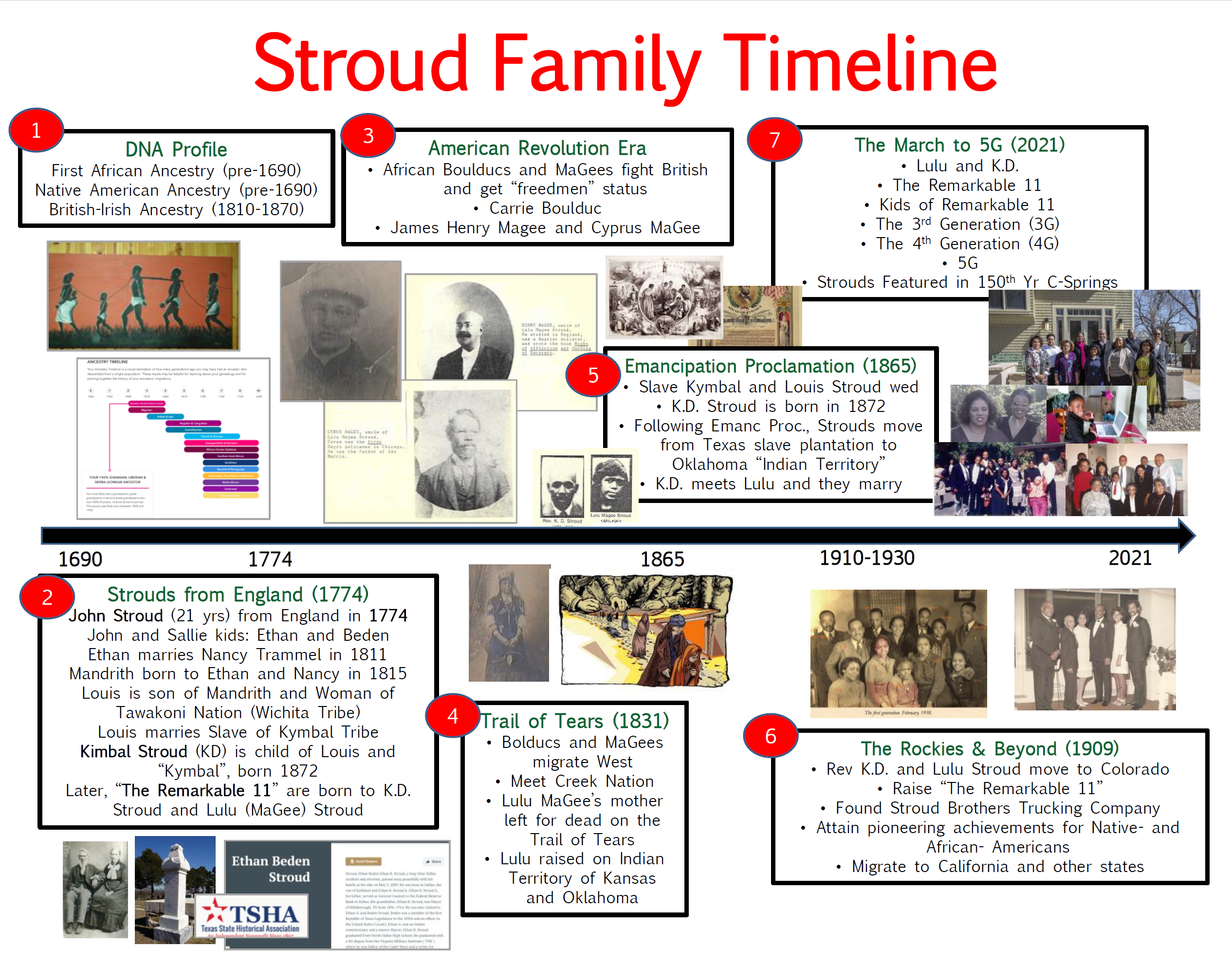
The Story · 1670 → Today
Out of Africa, across the Trail of Tears, into the Rockies.
Three peoples — African, Native American, and British-Irish — became one family over nearly four centuries. This is how the weave was made.
Chapter One · Origins
Out of Africa
Every human story begins on the same continent, and ours keeps the receipt. The African line of the family reaches back through Ghana, Nigeria, Sierra Leone, and Sudan — and forward into the holds of slave ships bound for the American colonies.
Some who survived that crossing would, generations on, buy or fight their way to freedom — including freemen who took up arms in the Revolution. The thread never snapped. It only went looking for daylight.
GHANA · NIGERIA · SIERRA LEONE · SUDAN
60,000 years
of migration
·
six continents
Chapter Two · Maryland, c. 1670
The first free generation
The documented family begins on Maryland’s Eastern Shore, when an enslaved African man and a free Irishwoman crossed a line the colony had drawn — and one law turned their union into freedom that held for good. This is where a nearly 400-year paper trail starts.
c. 1670 · Somerset County, Maryland
Sambo Game & Maudlin Magee
Sue’s grandparents
Sambo Game — African, born about 1670, enslaved and later manumitted in 1709 with land of his own. Maudlin Magee — a free Irishwoman. Because Maudlin was free, the colonial law of partus sequitur ventrem made their whole line free.
Born free
Fortune Game
their daughter · Sue’s mother
Free on Maryland soil — though “free” still meant years of indenture for a mixed-race child in the colony.
1705
“Mulatto Sue” Magee-Game
the documented matriarch
Sambo Game — African, born about 1670, enslaved and later manumitted in 1709 with land of his own. Maudlin Magee — a free Irishwoman. Because Maudlin was free, the colonial law of partus sequitur ventrem made their whole line free.
c. 1670 · Somerset County, Maryland
Sambo Game & Maudlin Magee
Sue’s grandparents
Free-born and twice-named — Magee from Ireland, Game from Africa — she registered her children in Stepney Parish under both names, because what gets written down survives.
Chapter Three · Removal
The Trail of Tears
The Native strand of the family runs through the Creek (Muscogee) and Tawakoni nations — peoples rooted on this land for thousands of years before the United States existed. In the 1830s, federal removal drove the nations westward along the route history calls the Trail of Tears.
The family’s Creek and Tawakoni blood braids into the line generations on, through Carrie Bolduc, carrying a spine-deep resilience that would later steady a daughter named Lulu through everything Jim Crow could throw at her.
CREEK (MUSCOGEE) · TAWAKONI · CHOCTAW
Chapter Four · The Migration, 1910
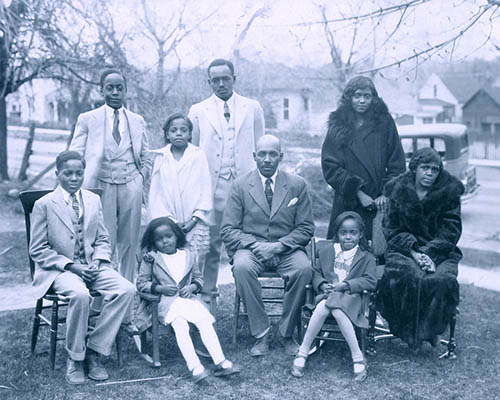
Into the Rocky Mountains
Chapter Five · Today
Reaching forward
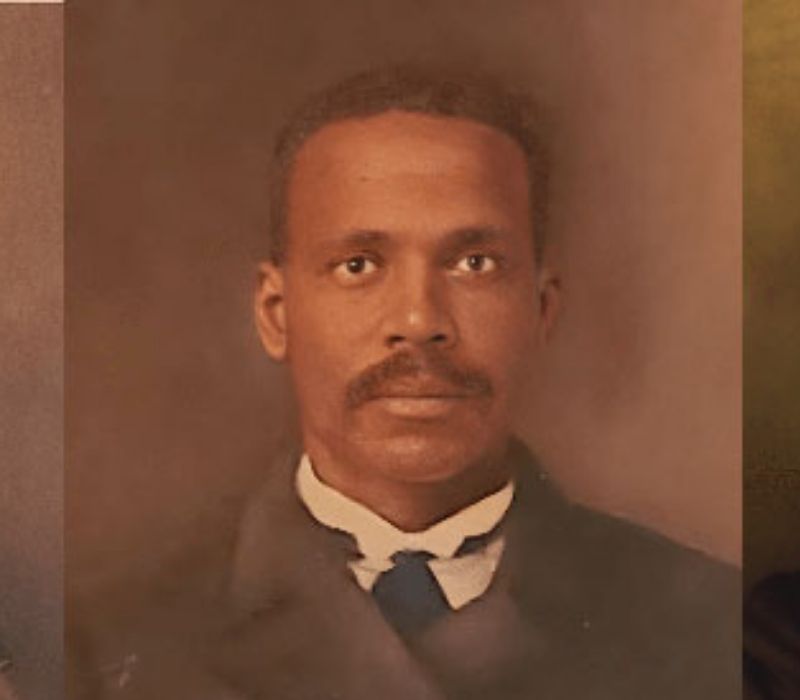
In the 1890s, K.D. and Lulu used education as the technology of their time to secure a future for their children. Generations on, the family knows that AI is becoming the game-changer for the underdog — and is using it to restore century-old photographs and answer questions about its own lineage.
The give-back continues through the Colorado College Stroud Scholars and the Stroud Leadership Academy, coaching young people from the United States to Africa to Brazil — toward a world where everyone starts at the same line.
CREEK (MUSCOGEE) · TAWAKONI · CHOCTAW
A story still being written.
New discoveries from the archive land in the Journal each month — and every descendant who comes forward adds another thread to the weave.